Trying to decide between a condo and a single-family home in Worcester? You are not alone. For many buyers, the choice comes down to a simple question with a lot of moving parts: do you want a lower entry price and less exterior upkeep, or more space and more control? This guide breaks down the Worcester numbers, the real monthly costs, and the lifestyle tradeoffs so you can make a practical decision with confidence. Let’s dive in.
Worcester price differences
In Worcester, condos usually cost less than single-family homes at the starting line. March 2026 MLS data shows a median sale price of $335,000 for condos and $487,500 for single-family homes.
That is a difference of $152,500, or about 31% less for condos at the median. Year-to-date numbers also show a similar gap, with medians at $310,000 for condos and $440,000 for single-family homes.
If you are focused on getting into the market with a lower purchase price, condos clearly deserve a close look. Current Worcester listing examples also support that pattern, with condo prices often showing up below many single-family options.
Worcester market pace
Price is only part of the story. The pace of the market can affect how quickly you need to act and what kind of competition you may face.
In March 2026, Worcester had 79 single-family listings with 1.2 months of supply and 58 days on market. Condos had 35 listings, 1.7 months of supply, and 37 days on market.
That tells you two useful things. First, both segments are relatively tight on inventory. Second, condos were selling faster on average, even with slightly more months of supply.
Monthly cost matters most
The best choice is usually not about sticker price alone. In Worcester, your real decision often comes down to all-in monthly cost.
A condo may have a lower price, but you also need to account for HOA dues. A single-family home may not have monthly association fees, but you will take on more direct maintenance responsibility.
Worcester’s FY2026 residential tax rate is $13.28 per $1,000 of assessed value. Using the March 2026 median sale prices, that works out to about $4,449 per year for a $335,000 condo and about $6,474 per year for a $487,500 single-family home, before the city’s CPA surcharge and any exemptions.
Here is a simple side-by-side view:
| Home type | Median March 2026 sale price | Estimated annual property tax |
|---|---|---|
| Condo | $335,000 | $4,449 |
| Single-family home | $487,500 | $6,474 |
Those tax estimates are only one part of your budget, but they help show how a lower purchase price can affect ongoing ownership cost.
Condo fees in Worcester
Condo fees are one of the biggest factors buyers overlook. These dues are usually separate from your mortgage payment, so you need to budget for them directly.
In Worcester, condo fees can range from a few hundred dollars to more than $1,000 per month depending on the building and what is included. One local example at 1511 Main St shows a $399 monthly HOA fee that includes water, sewer, master insurance, exterior maintenance, landscaping, snow removal, extra storage, refuse removal, and management.
That kind of setup can make monthly planning easier if you prefer bundled exterior expenses. But it also means you need to read the fee structure carefully and understand exactly what you are paying for.
Single-family upkeep and control
With a single-family home, you usually get more direct control over the property. You are not dealing with condo association rules in the same way, and there is often more flexibility around how you use and maintain your space.
The tradeoff is that repairs and maintenance fall on you. That includes routine work and larger expenses such as roofing, exterior repairs, snow management, landscaping, and other property upkeep.
A Worcester single-family example at 11 Scenic Dr shows no HOA fee, an 8,877-square-foot lot, and 4 parking spaces. That is a good snapshot of the typical tradeoff: more land, more parking, and more autonomy, but also more responsibility.
Worcester lifestyle fit
Your daily routine matters just as much as your budget. Worcester offers a mix of housing styles, and the right fit depends heavily on where you need to go and how you want to live.
Worcester Union Station serves as the city’s intermodal center, with MBTA commuter rail, Amtrak, inter- and intra-city buses, and the WRTA central hub next door. That makes downtown and Main Street-area condos especially relevant if you want easier access to transit.
Worcester as a whole is described as moderately walkable, with a Walk Score of 56. If you want lower-maintenance living and closer access to transit-connected areas, a condo may line up well with that goal.
That said, commute convenience is not limited to condos. A condo example on Main Street lists public transportation, shopping, walk and jog trails, and highway access, while a single-family example in Tatnuck also lists public transportation, T-station access, and highway access, but with a larger lot and no HOA.
The practical takeaway is simple: location matters as much as property type. You should compare exact addresses, not just broad assumptions about condos versus houses.
Condo rules and documents
If you are considering a condo in Worcester, document review is a major part of the decision. In Massachusetts, condominiums are governed by the master documents, deed, bylaws, and Chapter 183A.
The state also notes that questions about condo rights and responsibilities are legal in nature and should be reviewed with a real estate attorney. That means buyers should take condo document review seriously before moving forward.
You will want to understand the rules on:
- Residents and guests
- Tenants and rental guidelines
- Pets
- Assigned versus deeded parking
- Common expenses and assessments
Massachusetts law requires common expenses to be assessed at least annually, and the statute allows assessments for common-area items or owner-caused damage. In plain terms, your regular condo fee may not be the only shared cost you face over time.
Insurance differences to know
Insurance works differently for condos and single-family homes. That difference can affect both your budget and your risk planning.
Massachusetts guidance says condo associations usually carry the master policy for the building, common walls, and grounds. The individual unit owner then needs coverage for what the association policy does not insure.
That same guidance notes that association agreements can allow additional assessments after a loss. So when you compare condo options, it is smart to ask what the master policy covers, what your own policy needs to cover, and how the association handles loss-related costs.
With a single-family home, insurance is generally more straightforward because you are insuring the home and property directly. But you are also fully responsible for maintaining and protecting that property.
When a condo makes sense
A condo may be the better fit if your top priority is keeping the entry price lower and reducing exterior maintenance. It can also be a strong option if you like the idea of living near downtown or transit-oriented areas.
In Worcester, condos often make sense when you want:
- A lower median purchase price
- Less exterior upkeep
- A simpler day-to-day maintenance load
- Access to transit-connected locations
- A more predictable package of shared services
The tradeoff is that you need to be comfortable with HOA dues, shared decision-making, and association rules.
When a single-family home makes sense
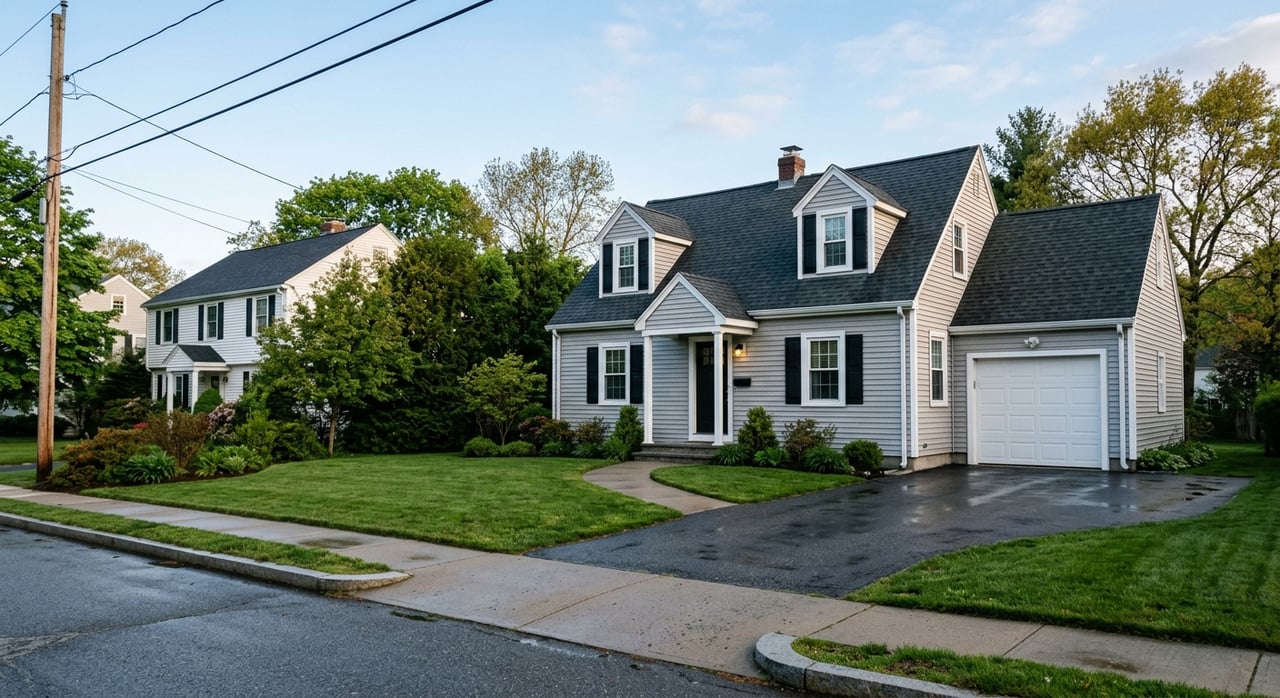
A single-family home may be the better fit if you want more room to spread out and more say over the property. It can also be the better choice if yard space, parking, and privacy are high on your list.
In Worcester, single-family homes often make sense when you want:
- More outdoor space
- More parking
- Greater privacy
- No condo association dues
- More direct control over property decisions
The tradeoff is a higher median price and more hands-on responsibility for maintenance and repairs.
A practical decision framework
If you are torn between the two, keep the process simple. Start with the factors that affect your daily life and monthly budget the most.
Ask yourself:
- What monthly payment feels comfortable once taxes, insurance, and fees are included?
- How much exterior maintenance do you actually want to handle?
- Do you need yard space, storage, or extra parking?
- How important is proximity to Union Station, bus routes, or major highways?
- Are you comfortable with HOA rules and possible assessments?
If lower entry price, lower exterior maintenance, and downtown or transit convenience matter most, a condo may be the right move. If yard space, privacy, parking, and autonomy matter most, a single-family home may be the better long-term fit.
The key is to compare real numbers on real properties, not just broad assumptions. In Worcester, the smartest choice is usually the one that fits your budget, commute, and tolerance for upkeep.
If you want practical help comparing Worcester condos and single-family homes, reach out to Carl Cempe for fast, local real estate help.
FAQs
What is the price difference between condos and single-family homes in Worcester, MA?
- March 2026 Worcester MLS data shows a median sale price of $335,000 for condos and $487,500 for single-family homes, a difference of $152,500.
Are condos cheaper than houses in Worcester, MA each month?
- Often, but not always. Condos usually have a lower purchase price and lower estimated property taxes, but monthly HOA dues can add a significant extra cost.
Do Worcester condos usually have HOA fees?
- Yes. Condo fees are typically paid separately from the mortgage, and local examples show they can be a few hundred dollars per month or more depending on the building and services included.
What do condo fees usually cover in Worcester, MA?
- Coverage varies by association, but a Worcester example at 1511 Main St includes water, sewer, master insurance, exterior maintenance, landscaping, snow removal, extra storage, refuse removal, and management.
Are single-family homes in Worcester better for space and parking?
- They often are. Local single-family examples show larger lots and more parking, which can make them a better fit if outdoor space and vehicle storage matter to you.
Should Worcester condo buyers review association documents carefully?
- Yes. In Massachusetts, condo ownership is governed by the master documents, deed, bylaws, and Chapter 183A, so buyers should review the documents closely and discuss legal questions with a real estate attorney.
Is a condo or single-family home better for commuting in Worcester, MA?
- It depends on the address. Condos near downtown and Main Street may offer easier access to Union Station and transit, but some single-family homes also offer access to public transportation and highways.